
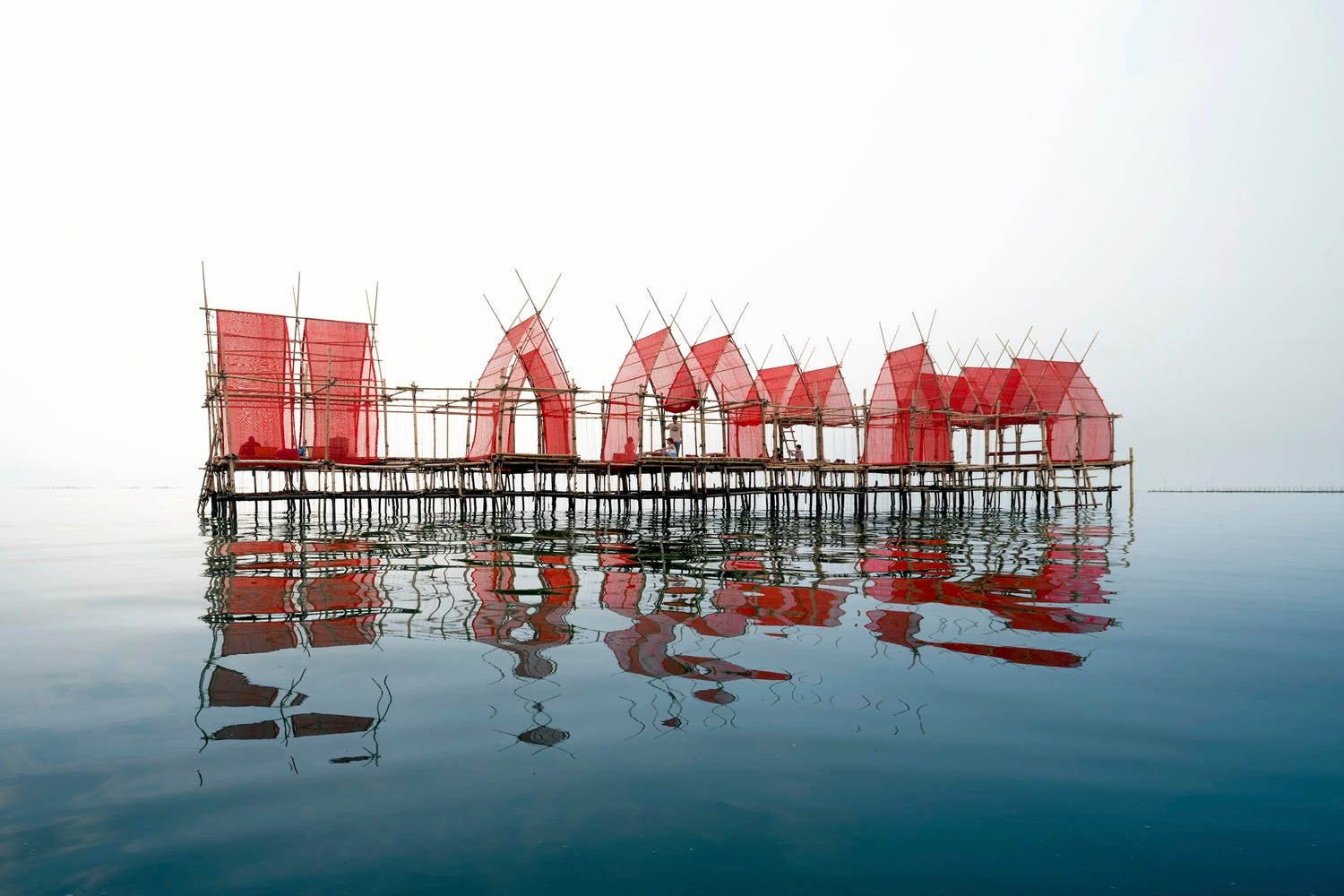
As you can imagine, there are so many projects to write about with updates populating my email on a daily basis that sometimes it is difficult to whittle it down to one. This week though, as soon as I saw a drawing of this project, I was hooked.
This pavilion in Thailand called the Angsila Oyster Scaffolding Pavilion off the coast of a fishing village in Angsila Bay, is not only visually striking but also reflects examples of how architects and designers incorporate sustainability into their designs.
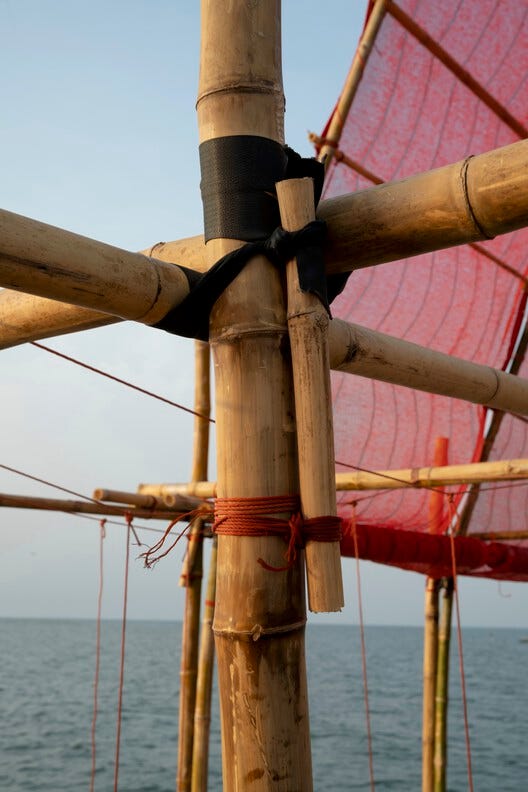
The bamboo used is a local building material and the structure looks similar to what is used for oyster cultivation in Thailand. In fact, this pavilion was constructed by local oyster farmers.
The bamboo is tied together with rejected seat belts from a local factory due to it’s non-conforming coloration, giving the structural joints an interesting look and a use for a material that would otherwise be discarded.
The pavilion is used to provide insight into the importance of oyster fishing which is part of the local economy and offers visitors an opportunity to enjoy what is brought up from the bay as part of a special meal.
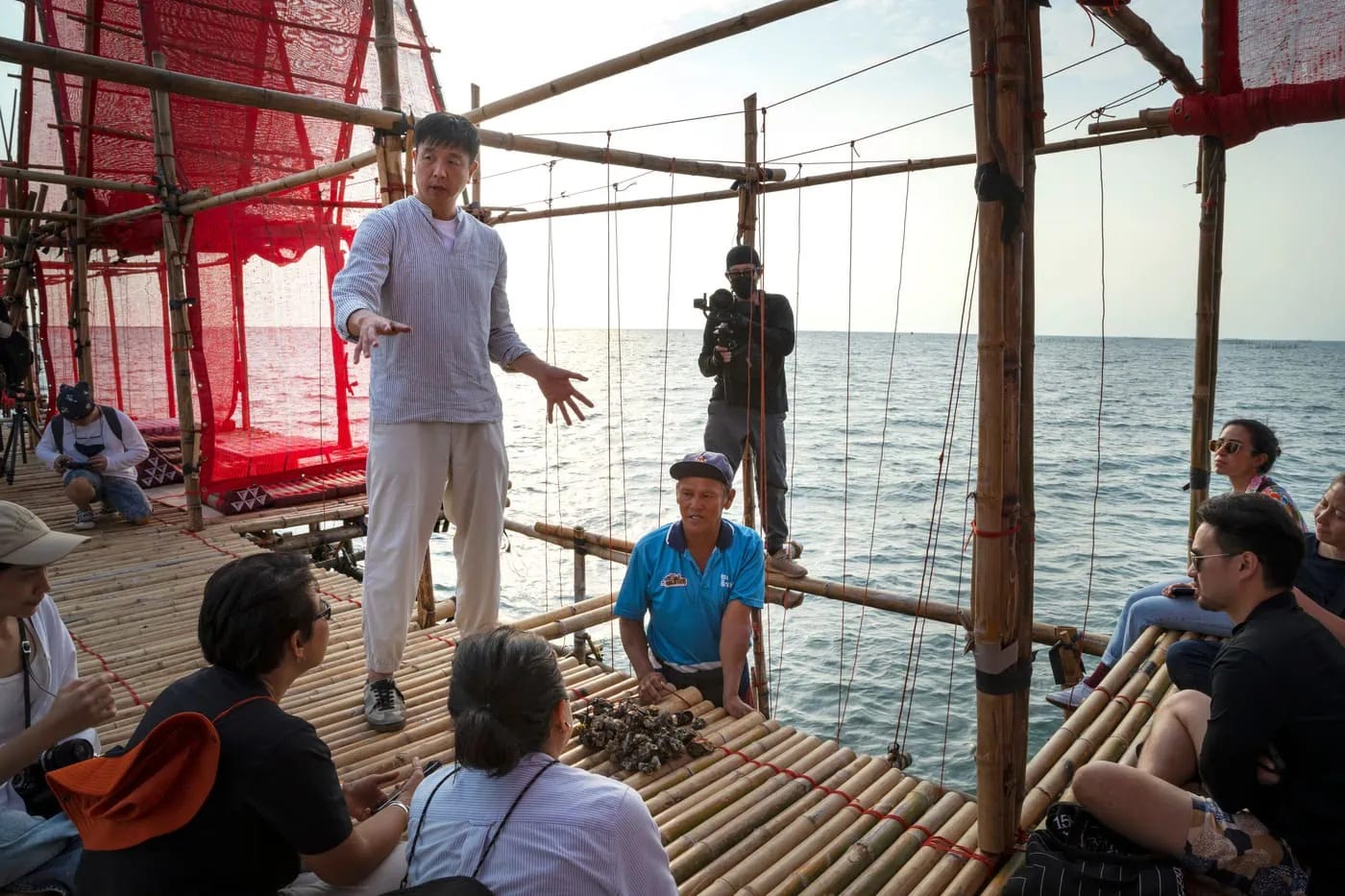
When it is not in use to teach others about the area, people who live locally have a platform for fishing and relaxing.
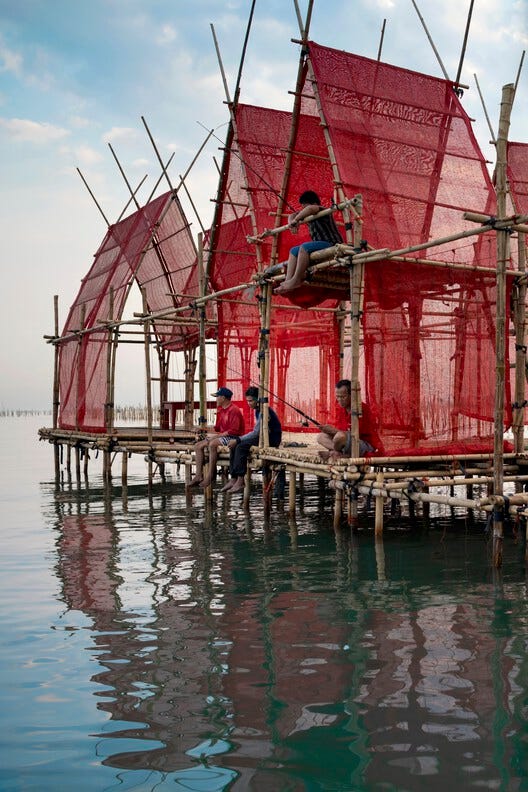
Architects, designers and engineers today are exploring ways to live and work on the water due to the challenges of rising sea levels.
For other projects that are responding to our changing environment and experimenting with new ideas, see BIG Architects floating city, the “Floating Island” in Belgium, and ArchDaily’s article on houses proposed or constructed on the water.
The design Angsila Oyster Scaffolding Pavilion was created by CHAT Architects who are based in Bangkok and the photographs were taken by W-Workspace located in Thailand.
For more on how the pavilion was constructed and other technical information go to issuu.
You can go to my Substack site to read more about architecture and design.
-Dora Taylor


 Architecture 101 for Kids and Teens